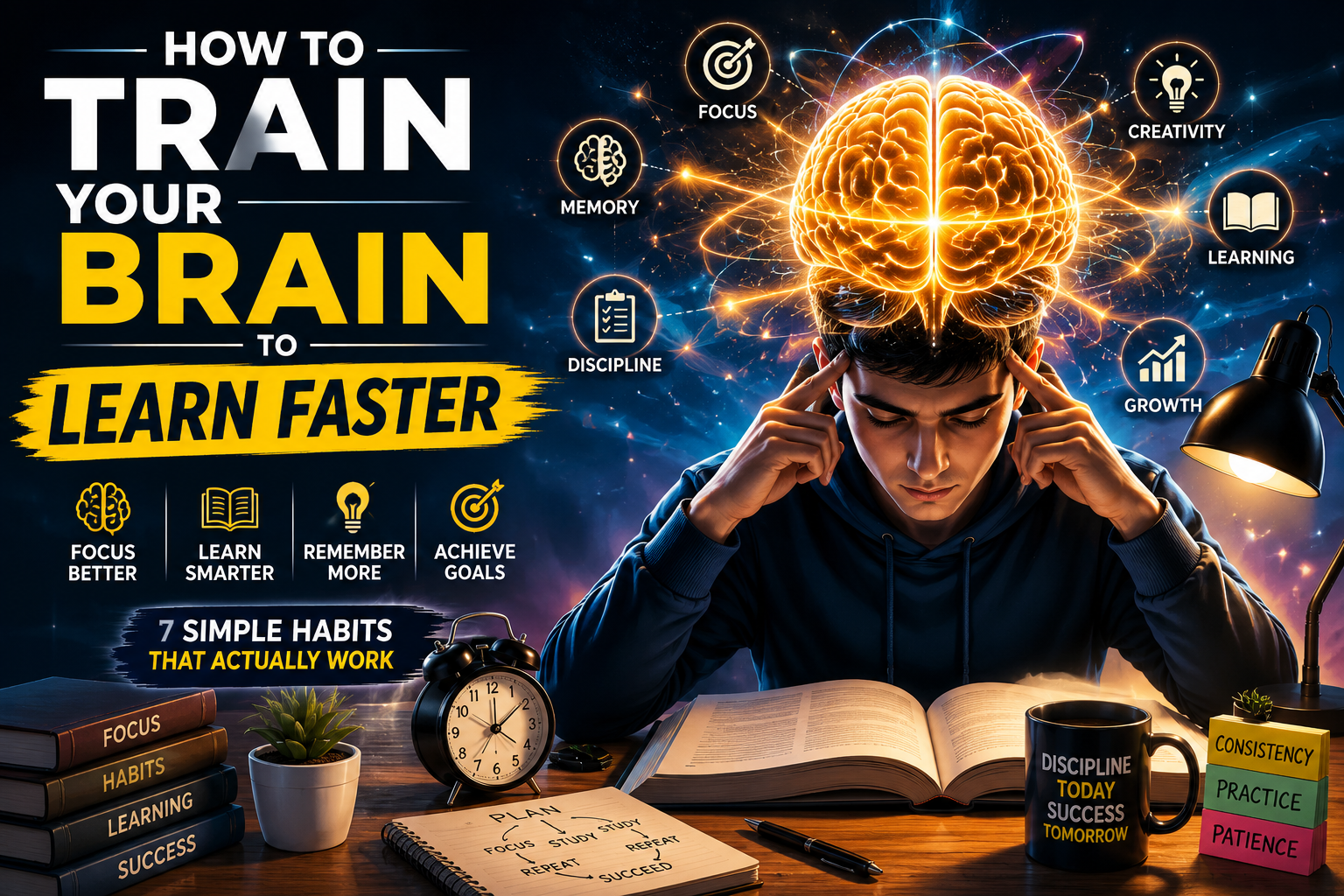
How to Train Your Brain to Learn Faster
Your brain learn faster when you focus on understanding, not just memorizing.
parctice recalling what you learn, review it regularly, and stay consistent everyday. The more you challenge your brain with and faster it becomes.
Quick Summary
Learning faster isn’t about being born smarter. It’s about training your brain with the right daily habits. Small changes in the way you sleep, study, practice, and focus can help your brain absorb information more effectively. In this guide, you’ll discover seven practical techniques that make learning easier and help you remember what you study.
Why Does Learning Feel Difficult?
Learning becomes difficult when your brain is overloaded with distractions, stress, poor sleep, and endless multitasking. Many people try to study for hours without taking breaks, thinking that more time automatically means better results.
However, your brain learns best when information is repeated, connected to existing knowledge, and reviewed over time. Understanding how your brain naturally processes information can completely change the way you learn.
7 Simple Ways to Train Your Brain to Learn Faster
1. Focus on One Task at a Time
Your brain learns best when it focuses on one thing at a time. Switching between different tasks or checking your phone every few minutes makes it harder to understand and remember information. Instead, choose one topic and give it your full attention for 25–30 minutes. This simple habit improves concentration, reduces mental fatigue, and helps your brain learn faster without spending extra hours studying.
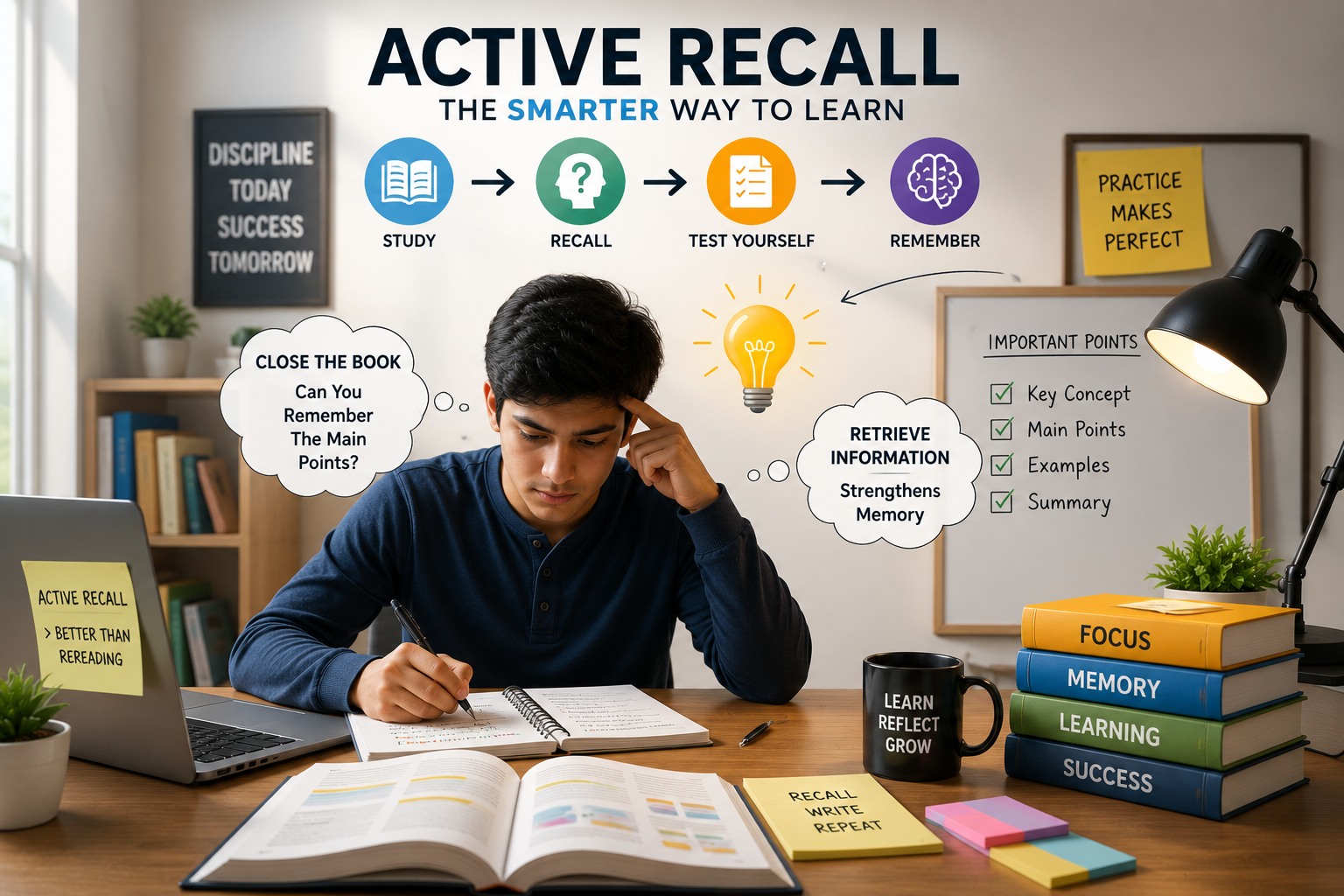
2. Use Active Recall Instead of Re-reading
Reading the same notes again and again feels productive, but it doesn’t always improve memory. A better approach is active recall. After studying, close your book and try to remember the main ideas without looking at your notes. You can also ask yourself questions or explain the topic aloud. This forces your brain to retrieve information, making learning faster and helping you remember it for a much longer time.
3. Teach What You Learn
Teaching is one of the easiest ways to test your understanding. When you explain a topic in simple words, your brain organizes information more clearly and identifies what you don’t fully understand. Even if no one is around, explain it to yourself as if you’re teaching a friend. If you can teach it clearly, you’ve probably learned it well.
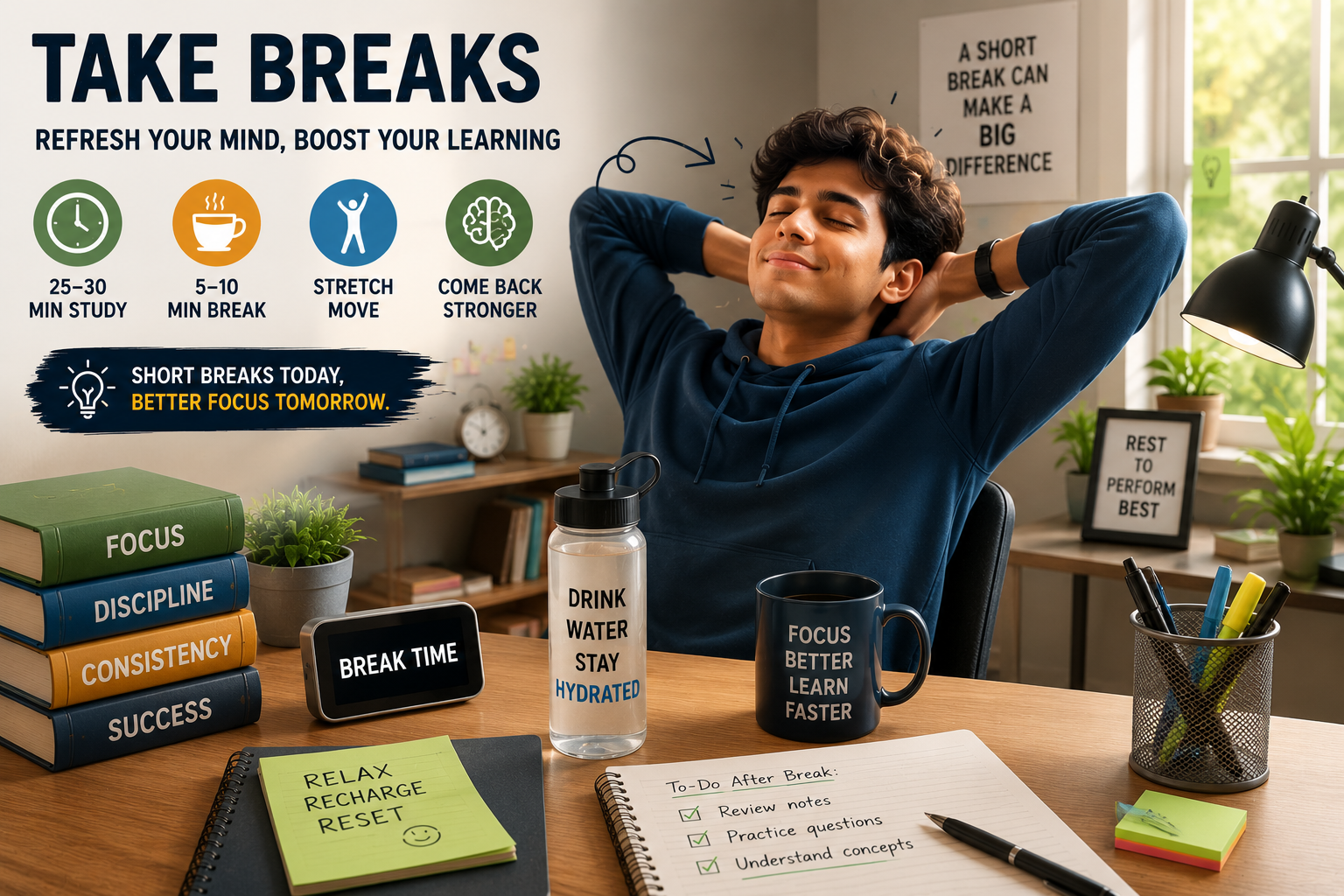
4. Take Regular Breaks
Studying for hours without a break can make your brain tired and less productive. Instead, study in short, focused sessions and take a 5–10 minute break after every 25–30 minutes. During your break, stretch, drink water, or take a short walk instead of using your phone. A refreshed brain learns faster and stays focused for longer.
5. Sleep Before You Memorize
Your brain stores new information while you sleep. That’s why staying awake all night to study often leads to poor memory and lower concentration. Aim for 7–9 hours of quality sleep every night, especially before exams or after learning something important. A well-rested brain can absorb, process, and recall information much more effectively.
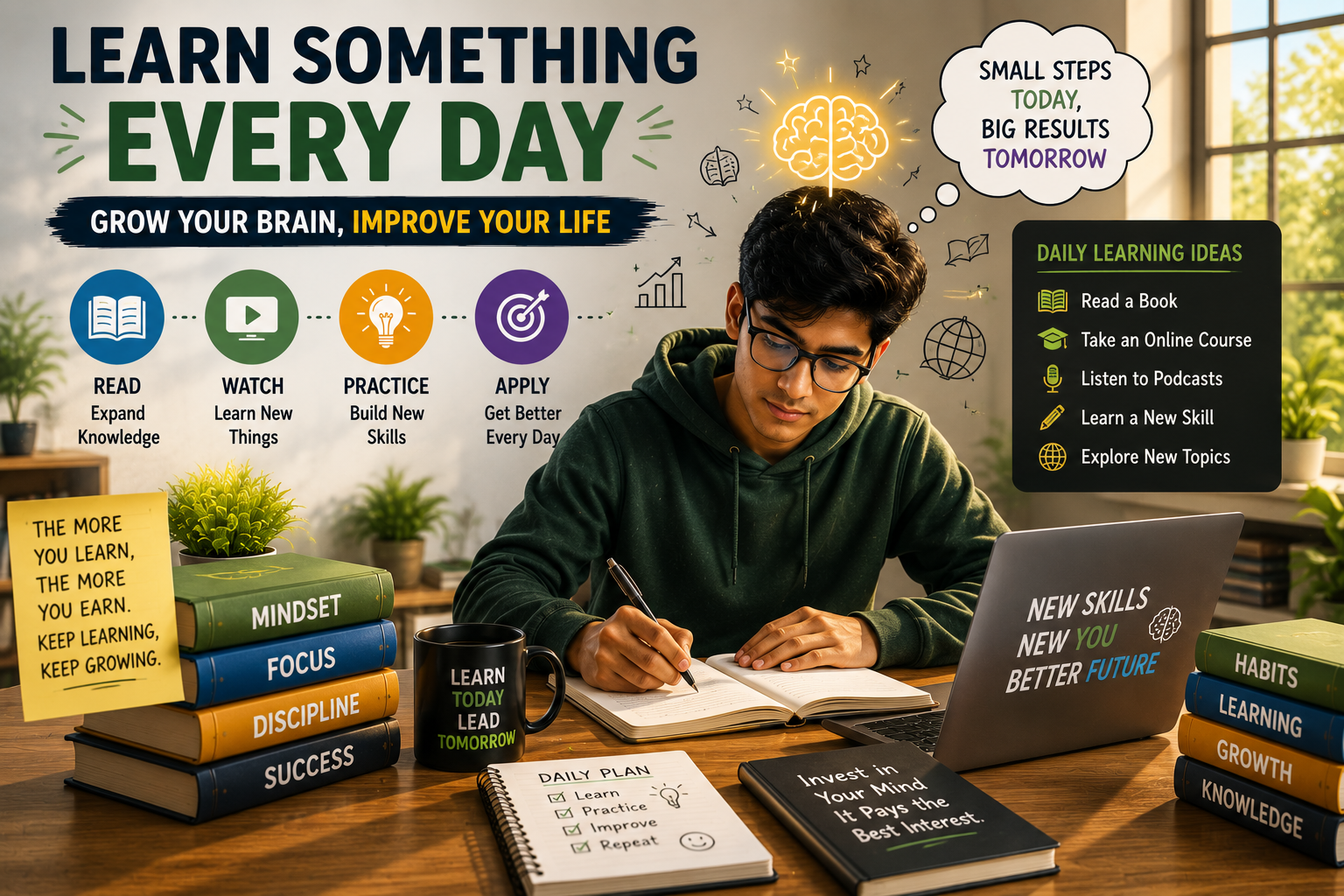
6. Learn Something Every Day
Your brain becomes stronger when you challenge it regularly. Reading a book, learning a new word, practicing a skill, or watching an educational video for just 20 minutes each day can improve your learning ability. Small daily progress is far more effective than trying to learn everything in one long study session.
7. Stay Consistent Instead of Studying for Hours
Learning faster isn’t about studying for long hours. It’s about showing up every day. Even 30–45 minutes of focused learning can produce better results than studying for several hours once a week. A consistent routine helps your brain build stronger memories and makes learning feel easier over time.
Conclusion
Training your brain doesn’t require expensive courses or complicated techniques. It starts with small daily habits that help your brain absorb, organize, and remember information more efficiently.
Instead of trying to learn everything at once, focus on learning a little every day. Over time, these small improvements build a stronger, faster, and more confident mind.
Frequently Asked Questions

 Key Takeaways
 Learn actively instead of reading passively.