The Hidden Reason Some People Can Never Say "No"
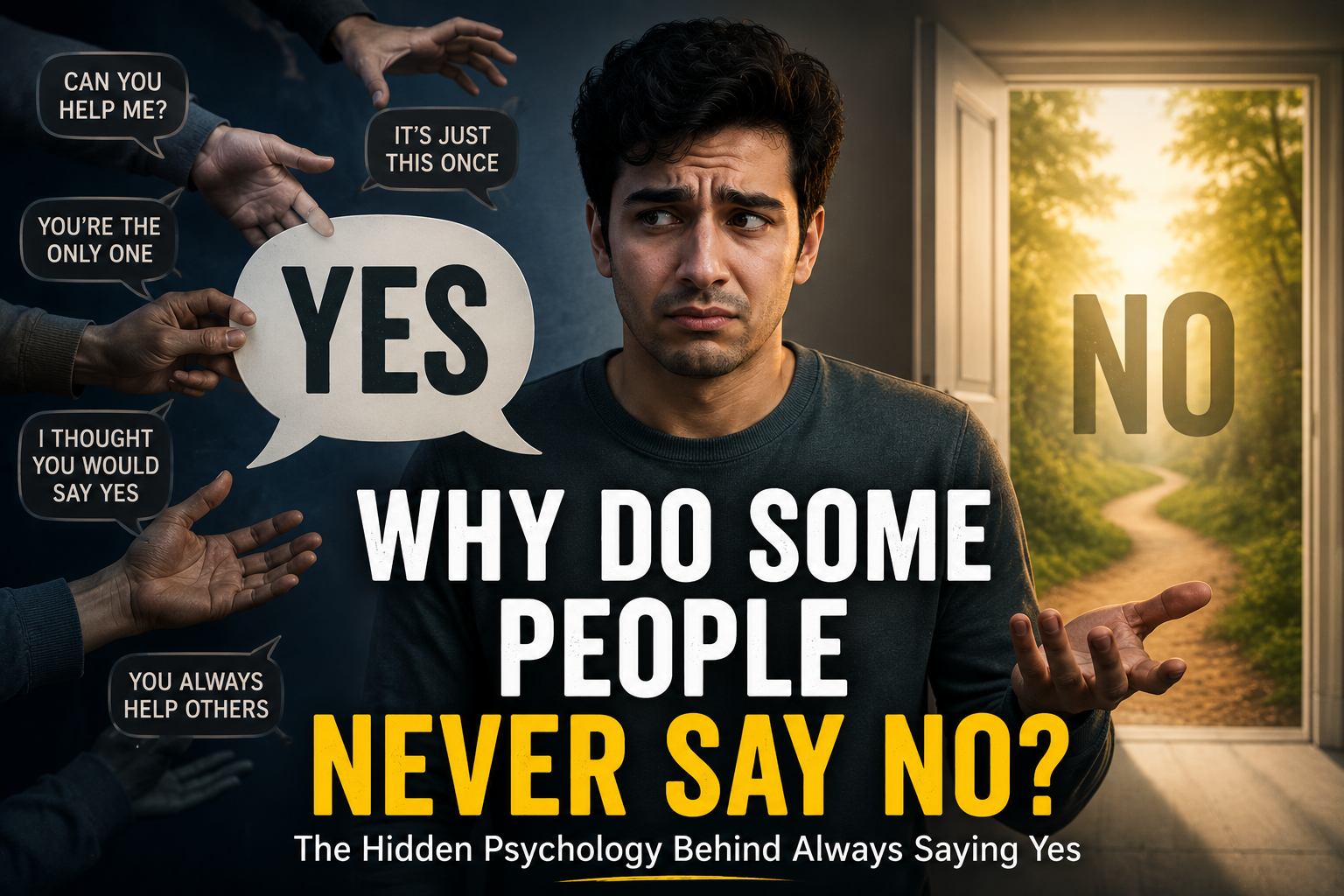
Have you ever agreed to do something even when you didn't want to?You knew saying "yes" would make you tired, stressed, or uncomfortable. Still, the word "no" never came out.If this happens often, it doesn't mean you're weak or too kind.In many cases, it means your brain has learned that keeping others happy feels safer than disappointing them.This behavior is more common than most people realize, and psychology offers a surprising explanation.
When "Yes" Feels Safer Than "No"
For some people, saying "yes" isn't a choice.
It's an automatic response.
Their brain quickly asks questions like:
. What if they get upset?
. What if they stop liking me?
. What if they think I'm selfish?
Instead of protecting their own time and energy, they protect other people's feelings.At first, this seems like kindness.But over time, it becomes a habit that slowly damages confidence and emotional health.
Your Brain Isn't Avoiding Work—It's Avoiding Rejection
Many people believe they say "yes" because they enjoy helping others.
That's only part of the story.
A deeper reason is the fear of rejection.
The human brain naturally wants acceptance.When you think saying "no" could disappoint someone, your brain treats it like a social threat.
Even a simple request can feel emotionally difficult.
This is why some people agree to extra work, unwanted favors, or uncomfortable situations—even when they know they should refuse.
The Silent Habit That Slowly Takes Control
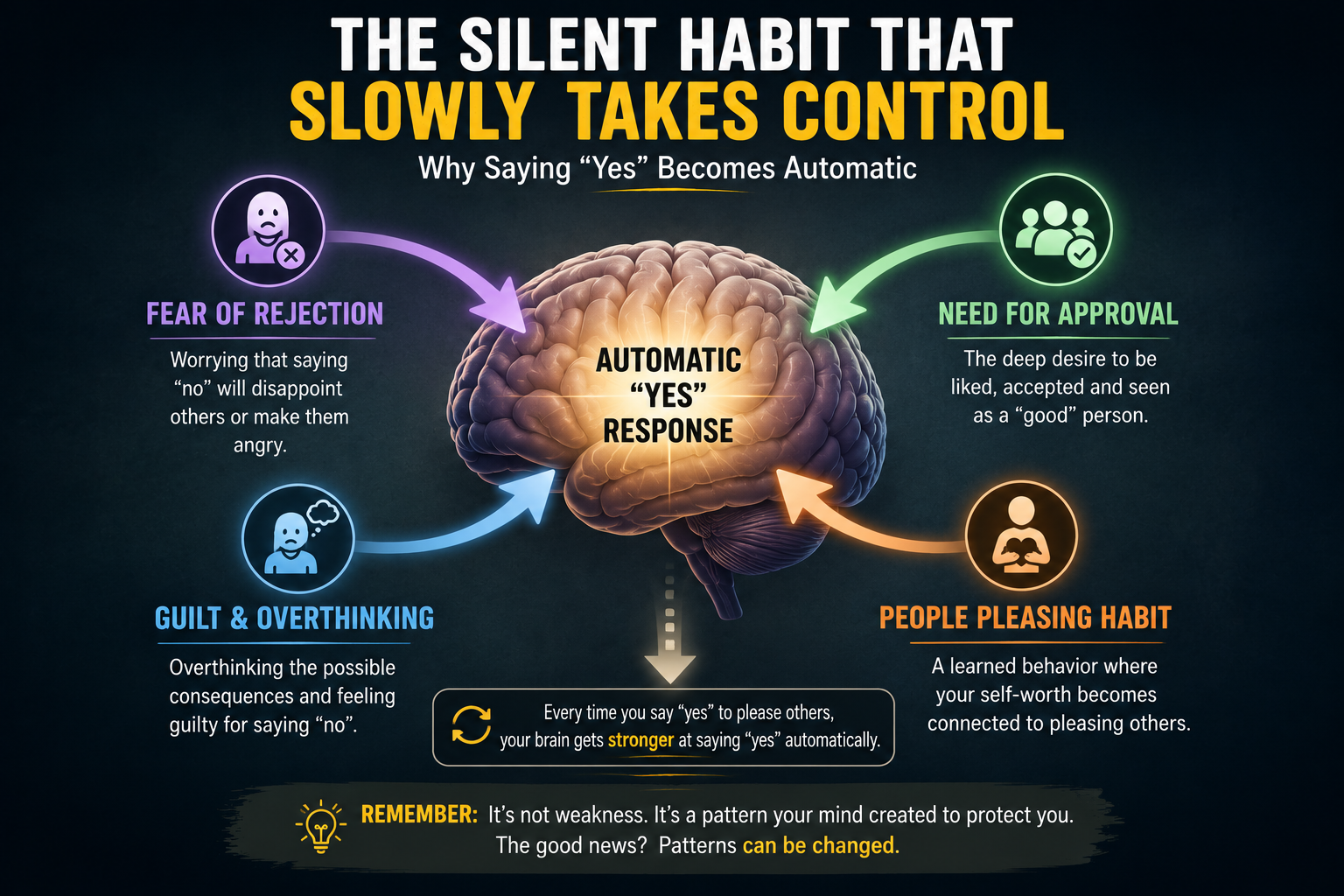
Every time you ignore your own needs to make someone else happy, your brain remembers the result.If people smile, thank you, or appreciate you, your brain stores that experience as a reward.Without realizing it, you start connecting your self-worth with helping everyone.After a while, saying "yes" feels normal.Saying "no" feels guilty.This is how a small habit slowly becomes part of your personality.
Pro Tip Box
What Happens When You Never Say "No"
Always saying "yes" may keep others happy for a while.
But it slowly creates problems that are easy to ignore.
You may start feeling mentally exhausted.
You have less time for your own goals.
Stress increases because your schedule is filled with commitments you never wanted.
The biggest loss isn't your time.
It's your ability to choose what truly matters to you.
How to Say "No" Without Feeling Guilty
Build Boundaries, Not Walls
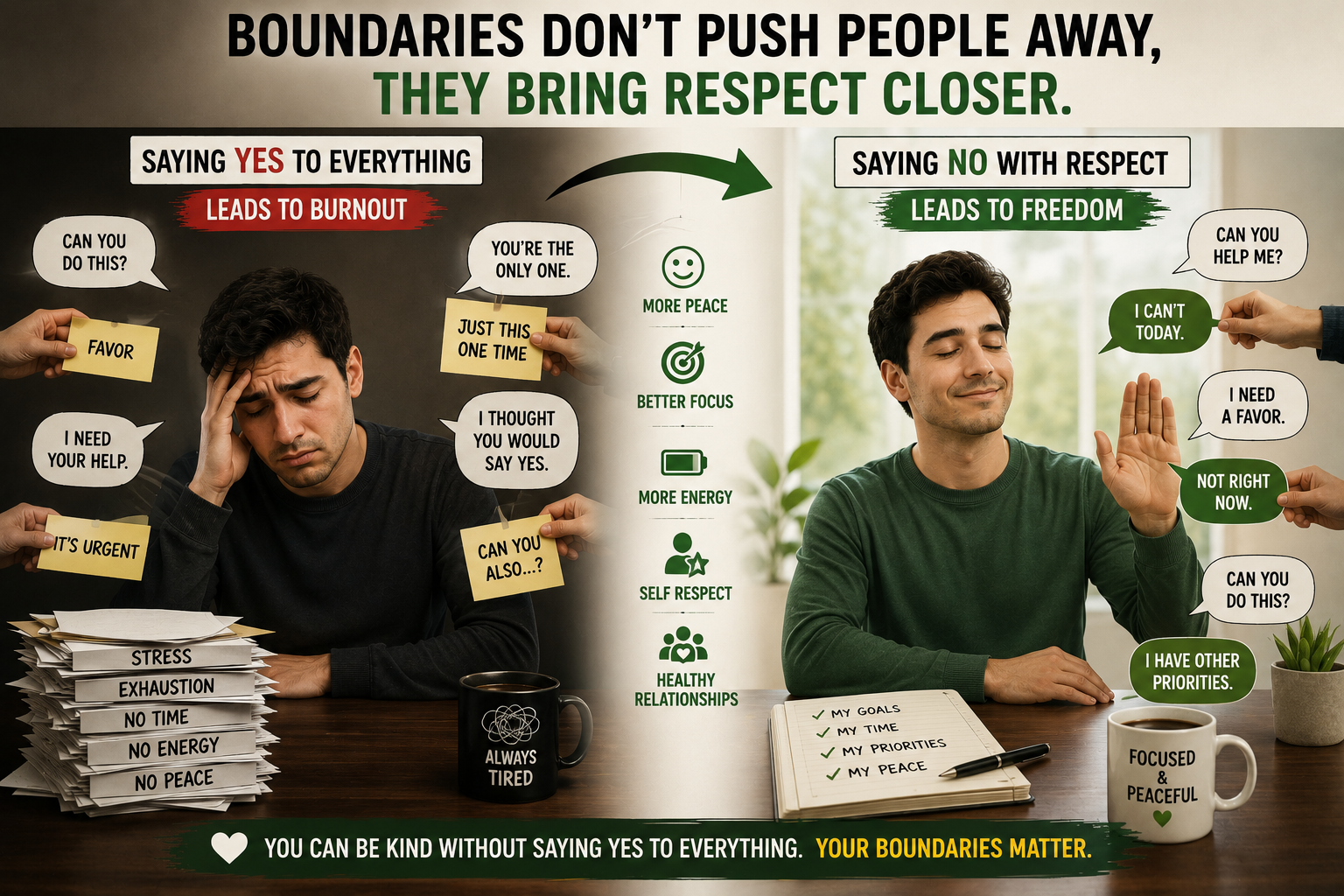
Some people avoid saying "no" because they think others will stop liking them.In reality, boundaries don't push good people away.
They help healthy relationships grow.When people know your limits, they respect your time more.
And when someone gets angry simply because you said "no," it often says more about their expectations than your behavior.
Remember:Boundaries protect relationships.They don't destroy them.
Final Thoughts
If you find it difficult to say "no," don't judge yourself.This habit usually develops over time through the need for acceptance, fear of rejection, or the desire to avoid conflict.The good news is that habits can change.Every time you say "no" with honesty and respect, you teach your brain that protecting your own well-being is not selfish.You don't have to make everyone happy.You only need to make decisions that are fair—to others and to yourself.Sometimes, the most powerful word you can say is a calm and respectful "No."